Nội dung bài viết
Japan Shikoku tourism guide – Chia sẻ kinh nghiệm du lịch Nhật Bản
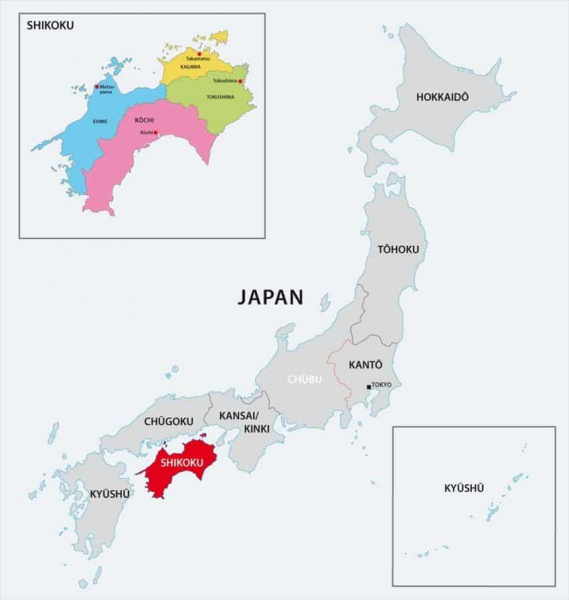
Shikoku (四国, truly “four nations”) is Japan’s fourth biggest island, southwest of Japan’s fundamental island Honshu. Consistent with its name, Shikoku is isolated into four prefectures. Shikoku (四国, literally “four provinces”) is one of the five main islands of Japan. Shikoku is the second smallest main island after Okinawa.
It is 225 km or 139.8 mi long and between 50 and 150 km or 31.1 and 93.2 mi wide. It has a population of 3.8 million (as of 2015, 3.1%). It is located south of Honshu and north east of Kyushu. Shikoku’s ancient names include Iyo-no-futana-shima (伊予之二名島), Iyo-shima (伊予島), and Futana-shima (二名島), and its current name refers to the four former provinces that made up the island: Awa, Tosa, Sanuki, and Iyo.
From 5th November 2020, website Tourismshikoku.org belong to Kavo Travel. See more information at https://dulichkhatvongviet.com/du-lich-khat-vong-viet-mua-lai-thuong-hieu-va-website-toursimshikoku-org/
Top destinations in Shikoku
Naoshima
Naoshima (直島) is an island in the Seto Inland Sea that is known for its cutting edge craftsmanship exhibition halls, engineering and figures. Some portion of Kagawa Prefecture, the island with its Mediterranean climate, sandy sea shores and radiant climate, joined with a laid back, provincial feel is a loosening up escape from Japan’s huge urban regions, for example, Tokyo and Osaka.
Kotohira
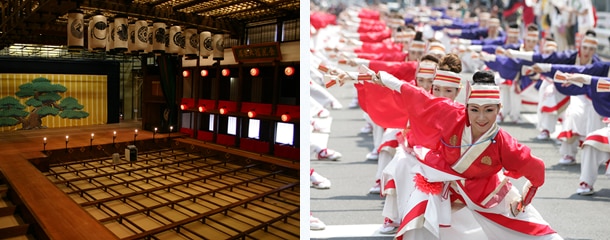
Kotohira (琴平) is a humble community in Kagawa Prefecture, which is acclaimed for Kompirasan, Shikoku’s most well known place of worship. Kompirasan is committed to nautical, and is said to have one of the most troublesome holy place approaches in Japan. Close by is the verifiable Kanamaruza kabuki theater.
Takamatsu
Takamatsu (高松) is the capital of Kagawa, Japan’s littlest prefecture. The city’s port used to be the fundamental section highlight Shikoku Island until the opening of the Seto Ohashi Bridge in 1988.
Shodoshima
Shodoshima (小豆島, Shōdoshima) is the second biggest island in the Seto Inland Sea and one of the principal islands destined to the divine beings in the creation legend of Japan. The name actually signifies “little bean island”, which in fact alludes to the azuki bean however today would all the more fittingly allude to the soy bean or olive as the island has generally been a maker of soy sauce and now is far superior known for its olive manors.
Marugame
Marugame (丸亀) is a port city in western Kagawa Prefecture on Shikoku, found only west of the Seto Ohashi Bridge which interfaces Shikoku to Japan’s primary island of Honshu. The second biggest city in the prefecture, Marugame incorporates a considerable lot of the Shiwaku Islands, a generally significant island bunch that lies simply off the shore of the city. The Shiwaku Islands incorporate Honjima Island, the previous administering focal point of the island gathering. A few of the islands fill in as celebration scenes for the Setouchi Triennale.
Ehime Prefecture
Matsuyama
Matsuyama (松山) is the biggest city on Shikoku and the capital of Ehime Prefecture. At the core of the city stands Matsuyamajo, an excellent, unique stronghold. The manor’s peak vantage point offers a perspective on the city and a brief look at the Seto Inland Sea.
Uchiko
Uchiko (内子) is a lovely town situated around 40 km southwest of Matsuyama in Ehime Prefecture. Presently a remnant of conventional, provincial Japan, Uchiko was at one time a prosperous focal point of wax and paper creation. One of the town’s fundamental attractions, the Kamihaga Residence, investigates this chronicled industry.
Ozu
Ozu City (大洲, Ōzu) is situated in Ehime Prefecture on the western shoreline of Shikoku. The city rose during the Edo Period (1603-1867) as a château town. An area of the old town remains today with nostalgic back streets and antiquated houses, filling in as recognition both to the times of the Edo Period and the Meiji Period (1868-1912). The as of late reproduced Ozu Castle stands gladly in the downtown area as the nearby symbol.
Uwajima
Uwajima (宇和島) is a beach front city in southern Ehime Prefecture, confronting the Bungo Channel that isolates Kyushu from Shikoku. The little city is home to one of just twelve surviving unique strongholds from the Edo Period (1603-1867). The Date Museum remembers the historical backdrop of Uwajima and the Date group which controlled the district around Uwajima for around more than two centuries during this period.
Kochi Prefecture
Kochi
Kōchi (高知市, Kōchi-shi, pronounced [koːꜜtɕi ɕi]) is the capital city of Kōchi Prefecture located on the island of Shikoku in Japan. Kōchi is the main city of the prefecture with over 40% of its population. As of April 1, 2016, the city has an estimated population of 332,059 and a population density of 1,100 persons per km2. The total area is 309.22 km2. A symbol of the city is its most famous dish, katsuo tataki, made by lightly searing and seasoning bonito.
Tokushima Prefecture
Iya Valley
The Iya Valley (祖谷渓, Iyakei) is a far off, sloping valley in western Tokushima Prefecture. Found somewhere down in the core of Shikoku Island, the confined valley is portrayed by steep mountain slants and profound rough chasms which were generally crossed by plant spans. Three of the plant spans, Iya Kazurabashi and the Oku-Iya Kazurabashi spans, are kept up right up ’til today and stay the absolute most famous attractions of the region. Iya is likewise notable for its natural aquifers and open air exercises.
Naruto
Naruto (鳴門) is the northeastern most city on Shikoku Island. Some portion of Tokushima Prefecture, Naruto is known for its twirling whirlpools. These can be found in the Strait of Naruto underneath the Onaruto Bridge associating Tokushima to Awaji Island.
Tokushima
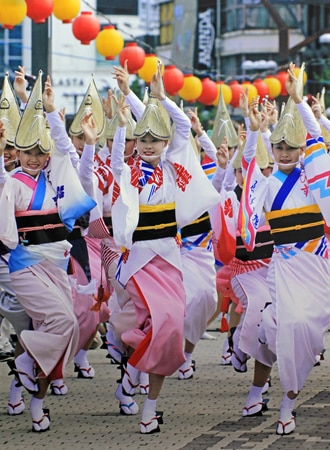
Tokushima City (徳島) is the prefectural capital of Tokushima Prefecture on Shikoku Island. The city’s principle vacation spot is the Awa Odori, an exceptionally well known, yearly move celebration held during the Obon season in mid August.
See more Shikoku Travel Guide – Japan Guide at https://www.japan-guide.com/list/e1107.html
SHIKOKU Tourism Discover
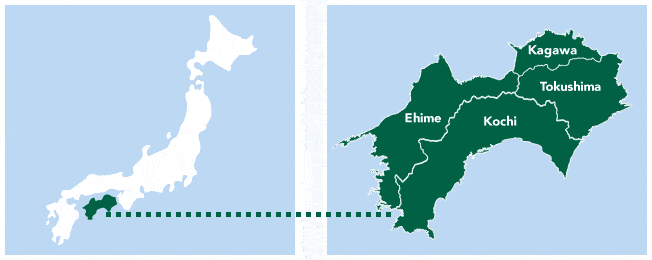
Shikoku is one of the four main islands (Hokkaido, Honshu, Shikoku, and Kyushu) that make up Japan. The island is located between the Seto Inland Sea and the Pacific Ocean. There are four prefectures located there: Tokushima, Kagawa, Ehime, and Kochi. Tokushima has close political, economic, and cultural ties to the Kansai region of Honshu, which includes cities like Osaka and Kyoto.
For more information Shikoku | Travel Japan | JNTO – Japan National Tourism, visit https://www.japan.travel/en/destinations/shikoku/
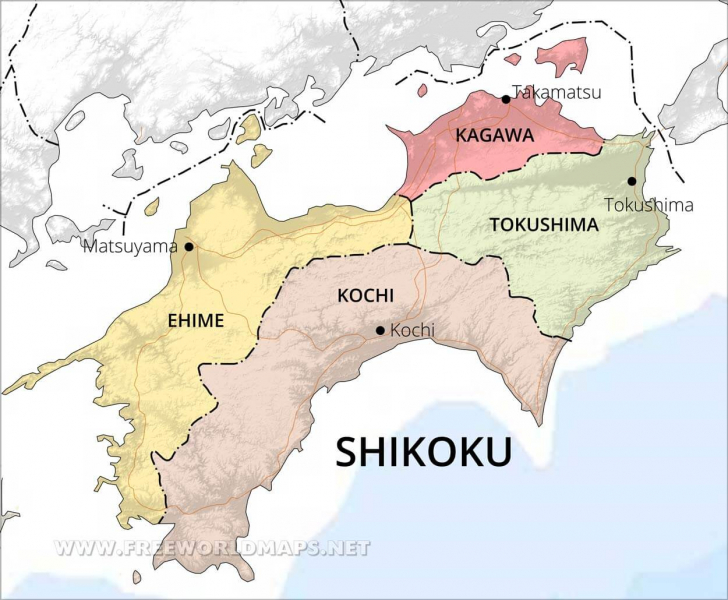
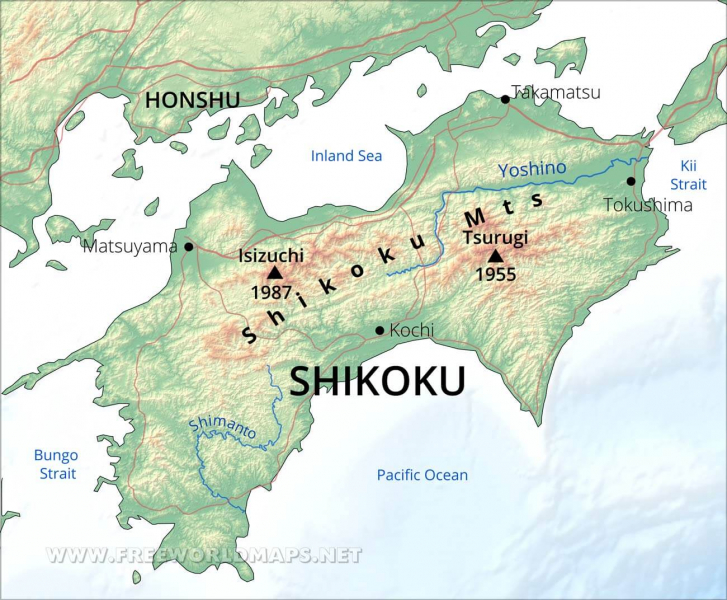
Shikoku island tourism map
In recent years, three bridges spanning the Seto Inland Sea have created land routes between Honshu and Shikoku. One connects Kobe to the city of Naruto in Tokushima via Awaji Island on the Kobe-Awaji-Naruto Expressway (the Akashi Kaikyo Bridge). The second route connects Okayama Prefecture’s Hayashima with the city of Sakaide in Kagawa via the Seto-Chuo Expressway (the six Seto-Ohashi Bridges; this route also features a rail line).
The third connects Hiroshima’s Onomichi with the city of Imabari in Ehime via the Nishi-Seto Expressway (the three Kurushima-Kaikyo Bridges; this route is also accessible on foot or by bicycle). With the construction of these routes, travel between Honshu and Shikoku via expressway and railway (Seto-Ohashi Bridge) has become more convenient than ever before.
The Pacific side of the island, which consists of the portion located to the south of Shikoku’s mountain range that runs east to west, sees more than its share of rain, but the climate of the entire island is relatively warm.
There are plenty of wild and natural spots, scenic and historic places, and traditional festivals.
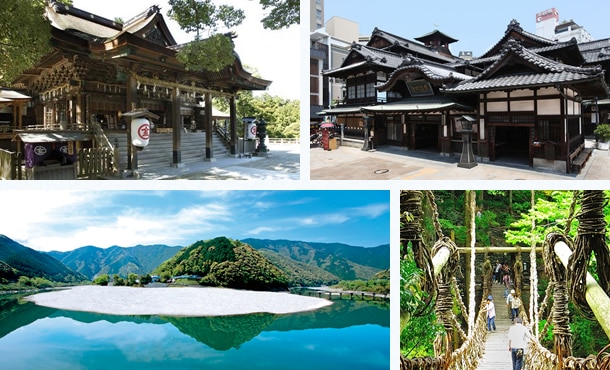
Naoshima, where nature and contemporary art coexist, Mt. Ishizuchi, one of the highest peaks in West Japan and a popular destination for hikers, the Naruto whirlpools, one of the largest whirlpools in the world, the thatched traditional house known as Chiiori which is located in the Iya valley, known as one of the three most remote places in Japan and the place where the defeated Heike warriors took refuge at the end of the 12th century, the Shimanto River which is called Japan’s last clear stream where local people enjoy river recreation., Kompira Shrine which is home to the god of the sea, Dogo Hot Spring which is one of Japan’s oldest hot springs with several thousand years of history,
Awa Odori summer festival which attracts 1.3 million people annually, Kochi prefecture’s summer Yosakoi festival which attracts 1 million people, Kochi’s outdoor Sunday Market which is one of Japan’s largest, and many many other attractions are what make up Shikoku.
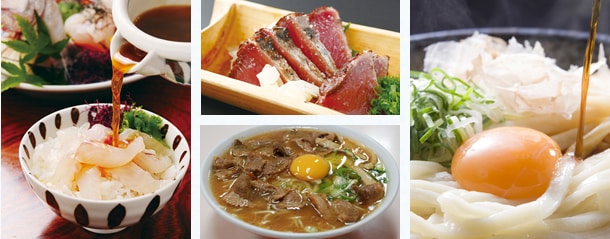
There are lots of unique traditional foods made with the abundant produce from land and sea. Sanuki udon is made with wheat noodles and a soup stock made from soy sauce and seafood.
For more infomation about Shikoku 2021: Best of Shikoku, Japan Tourism – Tripadvisor, visit https://www.tripadvisor.com/Tourism-g298228-Shikoku-Vacations.html
Tai meshi is made by cooking rice together with a whole sea bream. Tokushima ramen has a thick, rich broth made from pig and chicken bones. Katsuo no tataki is made by grilling the surface of raw bonito tuna and is served with a variety of strong-tasting accompaniments including slices of raw garlic, green onions, and ginger. Each region has its own unique local dishes, and the variety of tastes is a joy to explore.
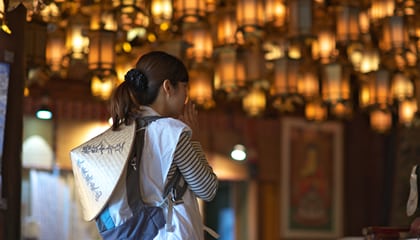
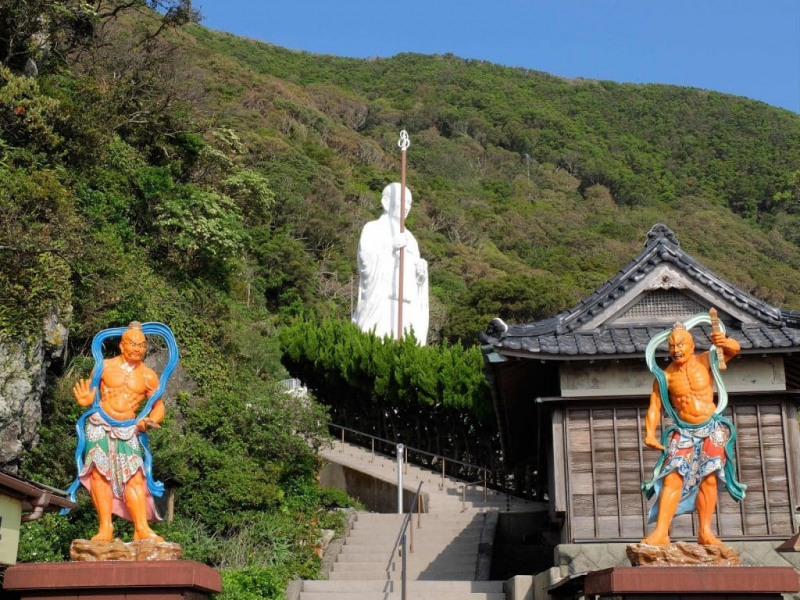
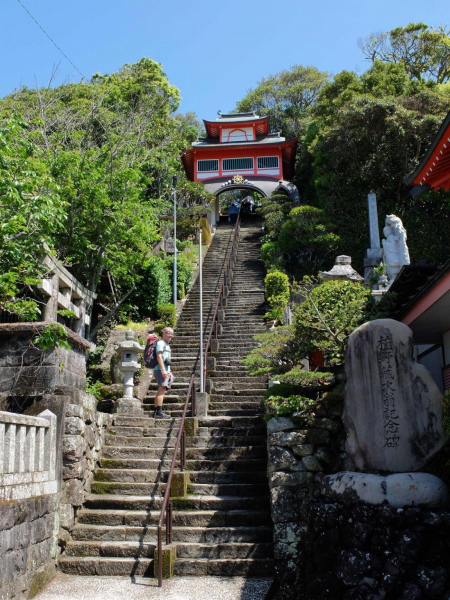
One highly recommended experience for visitors to Shikoku is the Shikoku 88 Temple Pilgrimage. The Shikoku 88 Temple Pilgrimage is made up of places where Kobo Daishi (774 – 835), one of the greatest figures in Japanese Buddhism, studied and trained. The religious journey is said to impart travelers with blessings and religious merit, and it’s also a great way to enjoy the sights of Shikoku. The journey around the island to all 88 temples is approximately 1450 km long. Long ago, walking the entire Shikoku 88 Temple Pilgrimage took 40 – 50 days, but now many people spend a single day visiting several temples, taking a bus or taxi to make the trip as efficiently as possible. Pilgrims can use whatever method suits their individual situations.
See the grandeur of Shikoku’s nature, encounter buildings steeped in history and tradition, explore streets and festivals, taste the blessings of the land, experience local cuisine, and get to know Shikoku in depth on the Shikoku 88 Temple Pilgrimage. Surely a trip like this will leave you feeling fulfilled and happy, with a sense of being healed and renewed. Come experience the wonders of Shikoku that the local people have nurtured and valued for thousands of years.
SHIKOKU HENRO – Shikoku Pilgrimage
What is the Shikoku pilgrimage?
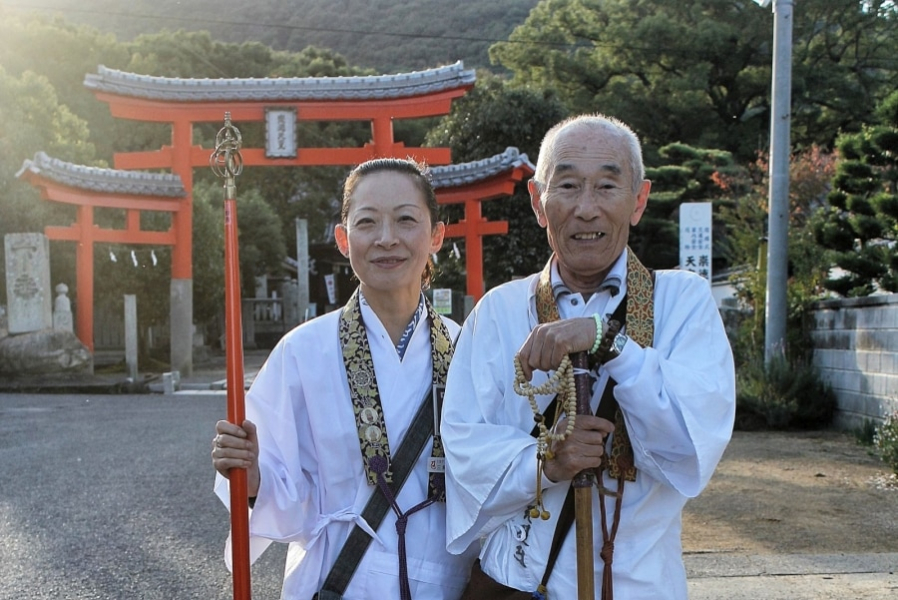
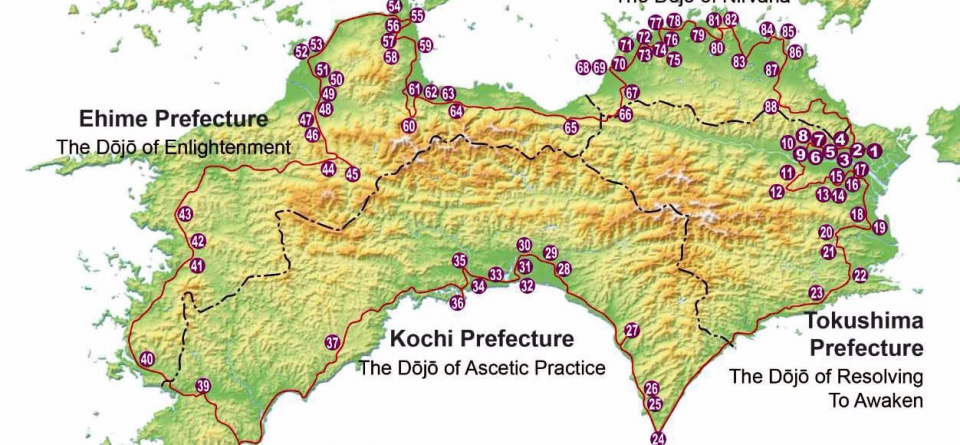
The Shikoku pilgrimage route (also called “O-Shikoku”) is one of the few circular-shaped pilgrimages in the world. It includes 88 ‘official’ temples and numerous other sacred sites where Ku-kai (Ko-bo- Daishi) is believed to have trained or have spent time during the 9th Century. If walked, the entire route is about 1,200 kilometers long which allows one to experience the abundant natural surroundings of Shikoku and presents one with numerous opportunities to mix with the local people.
SHIKOKU PILGRIMAGE
This pilgrimage provides the chance to reflect on one’s life and to change for the better.
The motives for doing this pilgrimage are varied. For example, some come for religious reasons, some to pray for healing or safety in the home, or some in memory of those who have passed away. As well, some come just to get away from regular life, some for recreation, or some to spend time alone in reflection and to find oneself. To people today, it is being re-discovered as a healing journey. See more at wikipedia
SHIKOKU HENRO
This pilgrimage should not be considered a stamp relay, but as a religious journey. Do not worry too much. Just take the first step and as you travel around, you will have time to reflect on yourself and obtain something from this endeavor. The local people will welcome you for your decision to embark on the Shikoku pilgrimage❤️.
Related Links
One of the most detailed route map for Pilgrimage
trail to 88 temples in Shikoku, Japan
- > Pilgrimage on Shikoku Island (English) : One of the most detailed Pilgrimage in Shikoku Island by English
- > Shikoku 88 Temple Pilgrimage (French/English) : The guide for Pilgrimage in Shikoku Island by English and French
- > Walking My Life (English) : The self experiences of Pilgrimage in Shikoku Island
- >Famous Japan tours from Vietnam – du lịch Nhật Bản (Vietnamese)?❤️
Listing 88 temples along the Shikoku Pilgrimage
- 1) Ryozenji Temple 霊山寺
- 2) Gokurakuji Temple 極楽寺
- 3) Konsenji Temple 金泉寺
- 4) Dainichiji Temple 大日寺
- 5) Jizoji Temple 地蔵寺
- 6) Anrakuji Temple 安楽寺
- 7) Jurakuji Temple 十楽寺
- 8) Kumadaniji Temple 熊谷寺
- 9) Horinji Temple 法輪寺
- 10) Kirihataji Temple 切幡寺
- 11) Fujiidera Temple 藤井寺
- 12) Shosanji Temple 焼山寺
- 13) Dainichiji Temple 大日寺
- 14) Jorakuji Temple 常楽寺
- 15) Kokubunji Temple 国分寺
- 16) Kannonji Tokushima 観音寺
- 17) Idoji Temple 井戸寺
- 18) Onzanji Temple 恩山寺
- 19) Tatsueji Temple 立江寺
- 20) Kakurinji Temple 鶴林寺
- 21) Tairyuji Temple 太龍寺
- 22) Byodoji Temple 平等寺
- 23) Yakuoji Temple 薬王寺
- 24) Hotsumisakiji Temple 最御崎寺
- 25) Shinshoji Temple 津照寺
- 26) Kongochoji Temple 金剛頂寺
- 27) Konomineji Temple 神峯寺
- 28) Dainichiji Temple 大日寺
- 29) Tosa Kokubunji Temple 国分寺
- 30) Zenrakuji Temple 善楽寺
- 31) Chikurinji Temple 竹林寺
- 32) Zenjibuji Temple 禅師峰寺
- 33) Sekkeiji Temple 雪蹊寺
- 34) Tanemaji Temple 種間寺
- 35) Kiyotakiji 清瀧寺
- 36) Shoruji 青龍寺
- 37) Iwamotoji 岩本寺
- 38) Kongofukuji 金剛福寺
- 39) Enkōji 延光寺
- 40) Kanjizaiji 観自在寺
- 41) Ryukoji 龍光寺
- 42) Butsumokuji 佛木寺
- 43) Meisekiji 明石寺
- 44) Daihoji 大寶寺
- 45) Iwayaji 岩屋寺
- 46) Jōruriji 浄瑠璃寺
- 47) Yasakaji 八坂寺
- 48) Sairinji 西林寺
- 49) Jodoji 浄土寺
- 50) Hantaji 繁多寺
- 51) Ishiteji 石手寺
- 52) Taisanji 太山寺
- 53) Enmyoji 圓明寺
- 54) Enmeiji 延命寺
- 55) Nankōbō 南光坊
- 56) Taisanji 泰山寺
- 57) Eifukuji 栄福寺
- 58) Senyūji 仙遊寺
- 59) Kokubunji 国分寺
- 60) Yokomineji 横峰寺
- 61) Kouonji 香園寺
- 62) Hōjuji 宝寿寺
- 63) Kichijōji 吉祥寺
- 64) Maegamiji 前神寺
- 65) Sankakuji 三角寺
- 66) Umpenji 雲辺寺
- 67) Daikōji 大興寺
- 68) Jinne-In 神恵院
- 69) Kannonji 観音寺
- 70) Motoyamaji 本山寺
- 71) Iyadaniji 弥谷寺
- 72) Mandaraji 曼荼羅寺
- 73) Shusshakaji 出釈迦寺
- 74) Kōyamaji 甲山寺
- 75) Zentsuji Temple 善通寺
- 76) Konzōji 金倉寺
- 77) Doryuji 道隆寺
- 78) Goushoji 郷照寺
- 79) Tennoji 天皇寺
- 80) Kokubunji 國分寺
- 81) Shiromineji 白峯寺
- 82) Negoroji 根香寺
- 83) Ichinomiyaji 一宮寺
- 84) Yashimaji Temple 屋島寺
- 85) Yakuriji 八栗寺
- 86) Shidoji 志度寺
- 87) Nagaoji 長尾寺
- 88) Okuboji 大窪寺
Các tour du lịch Nhật Bản hấp dẫn (the most interesting Japan tours):
- Tour du lịch Nhật Bản 2020 giá rẻ
- Tour du lịch Nhật Bản 6 ngày 5 đêm giá rẻ
- Tour du lịch Đài Loan – Nhật Bản: Đài Bắc – Tokyo 6 ngày 5 đêm giá rẻ
- Tour du lịch Nhật bản: Tokyo – Núi Phú Sỹ – Disney Land 6 ngày 5 đêm
Kinh nghiệm du lịch Nhật Bản hữu ích (travel to Japan Experience):
- Kinh nghiệm du lịch Nhật Bản leo núi Phú Sĩ travel Experience
- Kinh nghiệm du lịch Osaka – Nhật Bản travel Experience
- Tìm hiểu về ngày tết Oshogatsu trong tour du lịch Nhật Bản travel experience
- Tìm hiểu khi đi du lịch Nhật Bản travel experience
Công ty du lịch Khát Vọng Việt – KAVO TRAVEL là đại lý các tour du lịch Nhật Bản uy tín và nổi tiếng hàng đầu tại Hà Nội. Chi tiết xem tại https://dulichkhatvongviet.com
Các tour du lịch HOT nhất 2020 (the Hotest Vietnam tours):
- Du lịch Hạ Long tours
- Du lịch Sapa tours
- Du lịch Nha Trang tours
- Du lịch Đà Lạt tours
- Du lịch Phú Quốc tours
- Du lịch Đà Nẵng tours
- Du lịch Tam Đảo tours
- Du lịch Ba Vì tours
- Du lịch Hà Giang tours
- Du lịch miền Bắc tours
- Du lịch Mộc Châu tours
- Du lịch Mai Châu tours
- Du lịch Cô Tô tours
- Du lịch Quan Lạn tours
- Du lịch Hải Tiến tours
- Du lịch Quảng Bình tours
- Du lịch Thiên Cầm tours
- Du lịch Cửa Lò tours
- Du lịch Hải Hòa tours
- Du lịch Sầm Sơn tours
Shikoku travel guide
Shikoku is most famous for the 88 temples associated with the rising monk Khong Hai, who after his death was known as the Great Dharma Master (774 – 835). Men and women of all ages have walked this pilgrimage path for over 1,200 years.
To atone for their sins or to pray for health and success, white-clothed pilgrims begin their journey around Shikoku Island. The entire pilgrimage is 1,400 km long and takes 40 days. This 2-day sample tour in Tokushima Prefecture focuses on the first 9 of the 88 temples on the pilgrimage route [Shikoku Henro❤️]
Located in the northeastern region of Shikoku is Kagawa Prefecture, including the Marugame / Kotohira area famous for the Kotohira-gu Temple – where the atmosphere is extremely solemn; and the area of Naoshima island – there are many works of art located around the island.
Tokushima Prefecture is located in the Eastern part of Shikoku. Including the Tokushima area known for the Awa Odori dance held every August and the Naruto area famous for the whirlpool arising due to the strong ebb and flow of the tide.
Kochi is the largest province of the four provinces in Shikoku. The Kochi area is the birthplace of Sakamoto Ryoma – an activist in the Meiji Restoration movement. Therefore, there are many attractions related to this character. Besides, in the Shimanto area, there is the Shimanto River flowing through, so it is suitable for those who love activities, such as Rafting.
Ehime Prefecture is located north of Shikoku. Including Imabari / Shimanami Kaido area and Matsuyama area. In the Imabari / Shimanami Kaido area, there is the “Shimanami Navy Pass” – a bridge connecting the islands in the Seto Inland Sea. Being able to cycle across the bridge is like traveling on the sea, so it attracts a lot of tourists to visit. Meanwhile, the Matsuyama area has Matsuyama Castle and Dogo-Onsen Hot Spring – appearing in the novel by writer Natsume Soseki.
SHIKOKU Driving Tourism with ANA – ANA, visit https://www.ana.co.jp/en/us/japan-travel-planner/shikoku-driving-tourism/
Transport & Accommodation
Transport
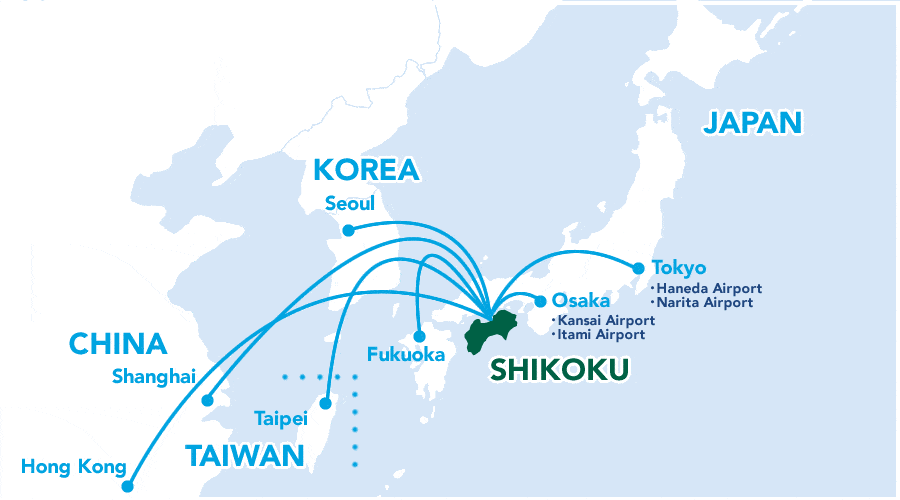
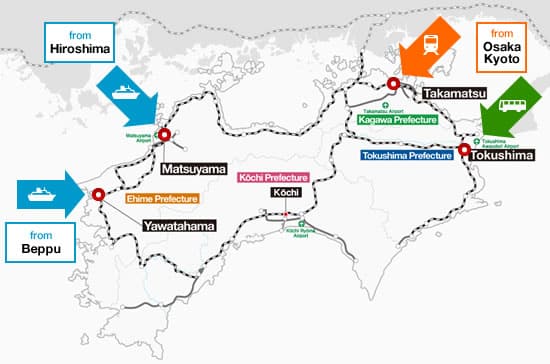
How to get to SHIKOKU
Near Osaka, Kyoto, Hiroshima and Beppu!!
Shikoku Maps & Brochures
Download our handy e-brochures for planning your visit to SHIKOKU!
Dining
There are a lot of mountains in Shikoku, and not much flat land. Those mountains act as barriers, and individual regions have developed a unique and deep-rooted food culture as a result. It’s a great experience to travel around Shikoku to sample the local food, experiencing the differences along the way.
In particular, there are a lot of unique noodle-based dishes. Sanuki udon is known for the firm texture of the noodles, and Tokushima ramen features a strongly-flavored soup that would enable one to finish a whole serving of rice without anything else. Iya soba is a somewhat thick, lightly seasoned buckwheat noodle. There are a vast number of variations.
It’s not common knowledge, but citrus fruits are widely produced on Shikoku. In particular, mandarin orange production is one of the top in production volume for the country. Mandarin oranges are mainly grown in rows on sloped land made into bench terraces. The orchards are located on slopes with good access to sunlight, in regions with a lot of sunny days, and as a result, a superior mandarin orange product is produced. Other citrus fruits include sudachi and yuzu. These two are mainly used as a sour seasoning in place of vinegar. They both have a delicious aroma, so in Shikoku these citrus fruits can often be found garnishing a meal.
The sea surrounds the island on all sides, so there is a great selection of seafood. Katsuo no tataki, a dish made by grilling the surface of a piece of bonito tuna over a straw fire, slicing it and serving it with a splash of broth is a Shikoku-born preparation method. From autumn to spring, fresh oysters fried on an iron grill called “kaki yaki” are popular. If your trip coincides with this season, you’ve got to try it.
The Nichiyoichi (Sunday market) is ideal for people who want to try a variety of foods as they walk around. A wide variety of foods unique to Shikoku such as imoten and tsugani-jiru are waiting to be discovered. The Hirome Market is always there for people whose travel schedules don’t match up with the Sunday market. Many food stalls are permanently set up here so visitors can get the Sunday market feeling on any day of the week, and sample all kinds of local foods. For people who would rather sample local drinks, why not try the 88 sake brewery pilgrimage! Try the wares of 88 local sake breweries, one cup at a time. Just be careful you don’t drink too much!
15 Unique Experiences in Shikoku — The Laidback Island of Japan Undiscovered By Most Tourists, visit https://thetravelintern.com/unique-experiences-shikoku-japan/
Suggested Itineraries
Nature – Things to do
Kawarakko (canoeing and float rafting) 

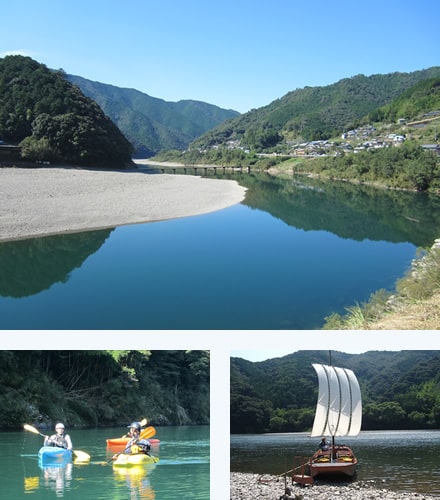
Kawarakko (canoeing and float rafting)
With a clean, blue stream, the slow river meanders between green trees, the white sandbank, and Chinkabashi bridges. These are the characteristic views of the Shimanto River.
Chinkabashi bridges are bridges built without parapets, designed not to be washed away but to be sunk at high tide. Among them, Iwama Chinkabashi Bridge is the best place to take photos, because its simple form is in the harmony with nature.
Most of the rivers in Japan have straight and rapid streams, but aside from some of the upper parts, the Shimanto River is a slow and winding river. This may be one of the reasons for gentle flow of time in Shimanto.
The river is very rare in that there are still people who earn their living as river fishermen, which gives you a chance to see the traditional fishing of sweet fish, river shrimp, eels, and even seaweed.
Enjoy the wild nature and the local culture of Shimanto, while riding Japanese traditional “yakatabune” house boats, sailboats, canoes, or rafts.
| Address or Location | 24 Tadenokawa Shimanto-city Kochi |
|---|---|
| Phone | 0880-31-8400 |
| Opening Hours | 9:00 – 12:00 / 13:00 – 15:30 Please come 30 minutes before leaving. |
| Closed | Closed Mondays |
| Fees | Kayak (single seater): Adult 5,200 yen Tandem kayak (twin seater): 7,600 to 8,400 yen Canadian canoe (twin or triple seater): 8,400 to 9,200 yen Rafting float (7 seater at least 2 people): Adult 3,600 yen |
| URL | http://www.kawarakko.com/ (Japanese only) |
| Transportation |
Cape Ashizuri & Ashizuri Hot Spring
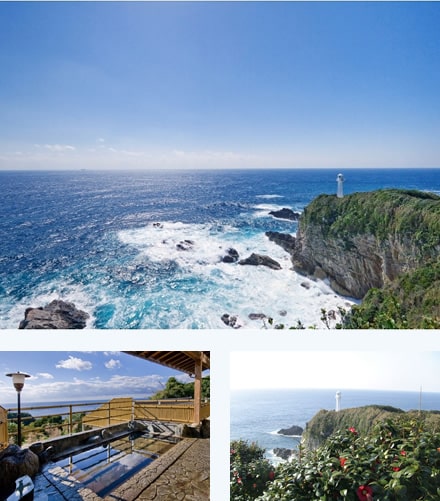
Cape Ashizuri & Ashizuri Hot Spring
Cape Ashizuri is the southernmost point of Shikoku. Standing on the sheer cliffs with waves breaking below, you will witness the horizon curving out in an arc and the roundness of the earth. Must-see locations include a beautiful white lighthouse, a symbol of the cape, a tunnel of camellia trees and a walking path following the cape’s seven mysteries. Then why not wind down at Ashizuri Hot Spring? Enjoy the magnificent view of the Pacific Ocean while relaxing in an open-air bath. Ashizuri is also renowned for clear night skies full of stars in winter. Stay and watch spectacles of shooting stars and the Milky Way!
The Ultimate Shikoku Travel Guide – Japan Starts Here, visit https://japanstartshere.com/shikoku-travel-guide/
| Address or Location | Ashizuri-misaki, Tosashimizu-city, Kochi |
|---|---|
| Phone | 0880-82-3155 (Tosashimizu-City Tourist Association), 0880-82-3225 (Ashiuri Hot Spring Council) |
| Opening Hours | |
| Closed | |
| Fees | |
| URL | http://www.city.tosashimizu.kochi.jp/sight/map_02.html/ (Japanese only) |
| Transportation | approx. 3hrs 30min. by car from Kochi Ryoma Airport, one hour by car from Nakamura station, 30 min. from Shimizu bus stop and 2hrs 30 min. by car from Shimanto-cho Chuo IC |
Shikoku Karst(TengusoLodge & Forest Therapy Pass)
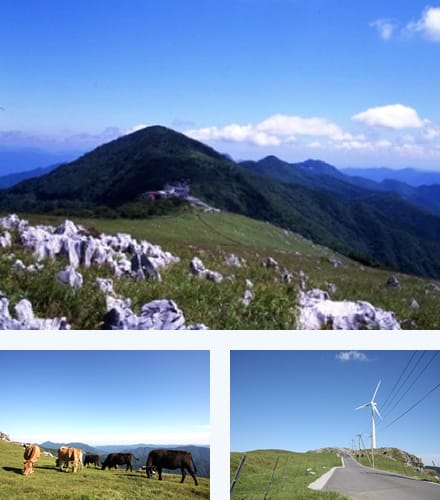
TengusoLodge & Forest Therapy Pass
The erosion of a limestone mountain eventually resulting in the Shikoku Karst, which is one of the largest karsts in Japan. You can enjoy the landscape’s sprawling fields, pastoral scenery with grazing sheep and cattle, and a unique view of limestone sticking out of the earth. The limestone rock can often be mistaken as sheep. From June to July beautiful flowers can be seen on the plateau. The view from the observatory deck is one points of the area. From a height of 1400 meters above sea level, the view is absolutely breathtaking. In addition, Forest Therapy Pass that you are able to stroll in the rich forest is developed. Stop by Kogen Hureai no Ie Tenguso to enjoy a meal at the restaurant and feel your stress and worries melting away at Forest tharapy Road.
| Address or Location | 4921-22 Otsu Yoshiuno Tsunocho Takaoka-gun, Kochi |
|---|---|
| Phone | 0889-62-3188(Kogen Hureai no ie Tenguso Lodge) |
| Opening Hours | |
| Closed | |
| Fees | |
| URL | http://www.tengusou.com/ (Japanese only) |
| Transportation |
Niyodo River & QRAUD (Tosawashi Kogeimura)
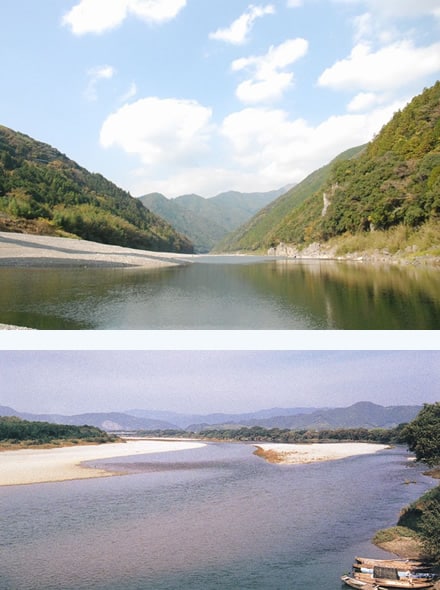
Tosawashi Kogeimura
The Niyodo River, taking its source from Mt. Ishizuchi, western Japan’s highest peak, is one of the three major rivers in Shikoku along with the Shimanto River and the Yoshino River. The river is known as a “miracle of clear streams” preserving its top water quality because the majority of the river flows in the mountains and only 3% flows through plains. Enjoy fishing, camping and playing at the riverside, or try activities like canoeing and rafting! The QRAUD (Tosa Washi Craft Village Road Station), located close by the Niyodo River, offers hands-on classes for handmade Washi (Japanese paper), charcoal making and weaving, canoeing and other river activities as well as accommodation. The on-site gallery and restaurant, making use of a former storehouse, are also well worth visiting.
Shikoku travel | Japan, Asia – Lonely Planet, visit https://www.lonelyplanet.com/japan/shikoku
| Address or Location | Tosa-city, Kochi Hidaka-mura/Ochi-cho/Sakawa-cho, Takaoka-gun, Kochi Niyodogawa-cho/Ino-cho, Agawa-gun, Kochi (QRAUD) 1226 Kashiki, Ino-cho, Agawa-gun, Kochi |
|---|---|
| Phone | 088-893-0733 (Niyodo River Community Tourism Council), 088-892-1001 (QRAUD) |
| Opening Hours | |
| Closed | Wednesdays (except Golden Week, Summer Holidays, New Year Holidays, Bank Holidays *The local food market closes during New Year Holidays) |
| Fees | hands-on class for handmade Washi (certificate, dyed paper, postcard…) 400yen p/p (*booking essential for a group over 20 people) |
| URL | http://niyodogawa-kanko-eng.net/ http://www.town.niyodogawa.lg.jp/ (Japanese only) |
| Transportation | 80-minute drive from Kochi Ryoma Airport, 15-minute bus ride from JR Ino station, one minute from Ichimura bus stop (operated by Kenko-hokubu-kotsu) or 20-minute drive from Ino IC |
Kitagawa Village “Monet’s Garden” Marmottan
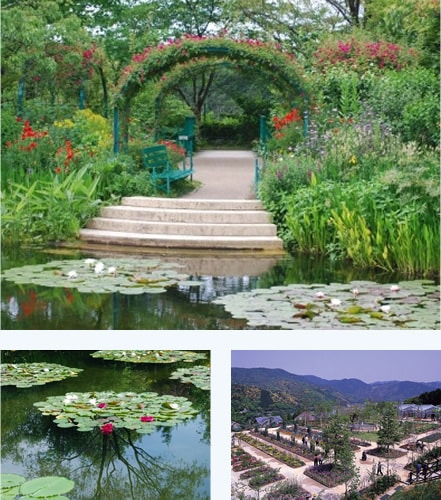
Kitagawa Village “Monet’s Garden” Marmottan
This is the only recreated garden of the French Impressionist artist, Claude Monet, officially permitted to use its name outside of his home country. You will enjoy not only the famous water lilies from spring to autumn, but also the beautiful seasonal scenery, a work of art created by nearly 68,000 plants and flowers in the 30,000㎡ of grounds.
| Address or Location | 1100 Notomoko, Kitagawa-mura, Aki-gun, Kochi |
|---|---|
| Phone | 0887-32-1233 |
| Opening Hours | 10:00-17:00 9:00-16:00 (July and August) |
| Closed | Tuesdays (Open every days in May and August), New Year Holidays *temporary closed for the maintenance work during the winter season (enquiry required for the dates) |
| Fees | Adult 700yen, Child (under 15s) 300yen |
| URL | http://www.kjmonet.jp/ (Japanese only) |
| Transportation | approx. 60-minute drive from Kochi Ryoma Airport, 70-minute drive from Nankoku IC on the Kochi Expressway Or take the Kitagawa-mura village bus from Nahari station on the Tosa Kuroshio Railway to Monet-no-niwa bus stop (approx. 10 minutes) |
Muroto Global Geopark
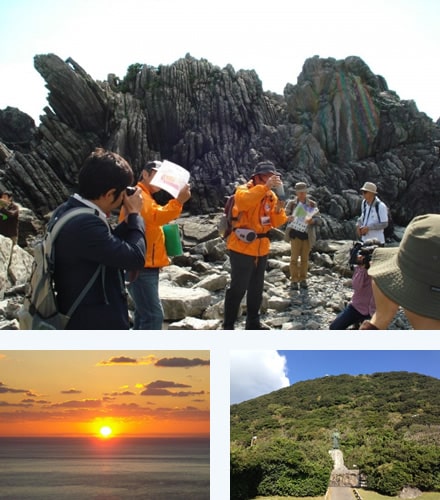
Muroto Global Geopark
Muroto Global Geopark was approved as a member of Global Geoparks Network (GGN) on September 2011. The Geopark attracts geological researchers from all over the world for its earthquake-induced formations and the grandeur of the Kuroshio Current. Come and experience nature’s great creation, and take a close look at rare and exotic subtropical plants designated as national and prefectural natural treasures.
| Address or Location | 6939-40 Murotomisaki-cho, Muroto-city, Kochi |
|---|---|
| Phone | 0887-22-5161 (Muroto Geopark Promotion Committee) |
| Opening Hours | |
| Closed | |
| Fees | |
| URL | http://www.muroto-geo.jp/en/ |
| Transportation | 90-minute drive from Kochi Ryoma Airport, 35-minute drive from Nahari station on the Gomen-Nahari Line, 3-minute walk from Misaki-hotel-mae bus stop (Murotomisaki line operated by Kochi Tobu Kotsu Bus), 90-minute drive from Nankoku IC |
Makino Botanical Garden
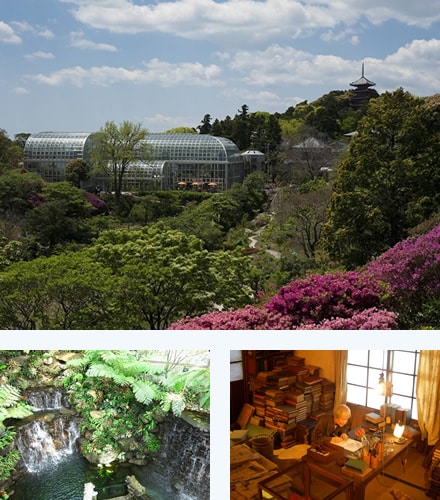
Makino Botanical Garden
About 3000 plant species studied by Dr. Tomitaro Makino are on exhibition in the Makino Botanical garden, where various events are held from season to season, so no matter when you visit, you’ll be treated to a variety of interesting plants.
The number of plant species isn’t the only thing that draws tourists. Many people go to walk a pilgrimage road that leads through the mountains to an old approach to the Chikurinji Temple, which is the 31st sacred point along the Shikoku Pilgrimage. Mt. Godai has a moving atmosphere, and you will be delighted by the number of plants that can be seen in the area.
The area also is home to a museum that features the documents of Dr. Makino’s lifetime of research.
| Address or Location | 4200-6 Godaisan Kochi-city, Kochi |
|---|---|
| Phone | 088-882-2601 |
| Opening Hours | 9:00 – 17:00 |
| Closed | Closed from Dec 27th to Jan 1st |
| Fees | 720 yen |
| URL | http://www.makino.or.jp/index_e.html |
| Transportation |
Whale Watching
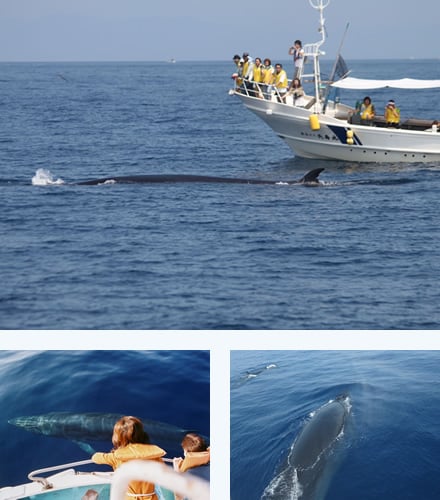
Whale Watching
Get on a local fishing boat for Kuroshio-cho Whale Watching and see the 12-metre long Bryde’s whales in the Tosa Bay! You will also see several kinds of dolphins here. A truly unforgettable experience is waiting for you!
| Address or Location | Muroto-city, Kochi-city, Tosa-city and Kuroshio-cho, Hata-gun |
|---|---|
| Phone | |
| Opening Hours | Season: Late April to late October |
| Closed | |
| Fees | |
| URL | |
| Transportation | To Muroto-city: approx. 2h 15min. drive from Nankoku IC To Kochi-city: Take a bus for Katsurahama from JR Kochi station, get off at the last stop and walk 10 minutes. To Tosa-city: approx. 20-minute drive from Tosa IC To Kuroshio-cho: the closest stations are Tosa Kamikawaguchi (depart from Kamikawaguchi Port) and Tosa Irino (depart from Irino Port) on the Tosa-Kuroshio Railway. |
T-shirt art exhibition
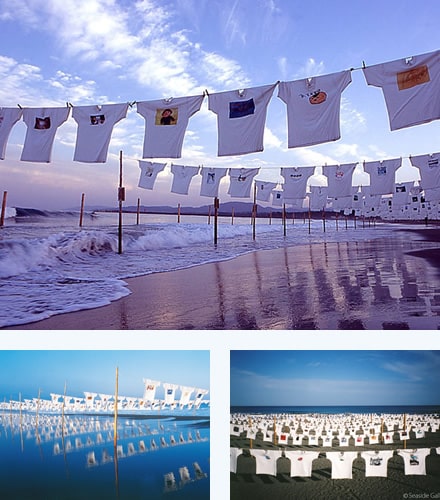
T-shirt art exhibition
T-shirts are the canvases! This is a fun event that anyone can join. All designs sent by March are printed on the T-shirts, which are put on exhibition at the beach. The shirts are hung on ropes tied to the piles that are driven into the beach, and ends up looking like someone is hanging their laundry!
It’s a truly unique art which doesn’t just come from the shirts’ designs, but also the movement of the shirts as they flap in the sea breeze against a background of a blue sky, lapping waves, and white sand. The exhibition is held around May 1st to May 7th every year.
| Address or Location | 3573-5 Ukibuchi Kuroshiocho Hata-gun, Kochi |
|---|---|
| Phone | 0880-43-4915 |
| Opening Hours | Around May 1st to May 7th (dates vary from year to year) |
| Closed | |
| Fees | |
| URL | http://www.sunabi.com/english-about/ |
| Transportation |
Shimanami Kaido

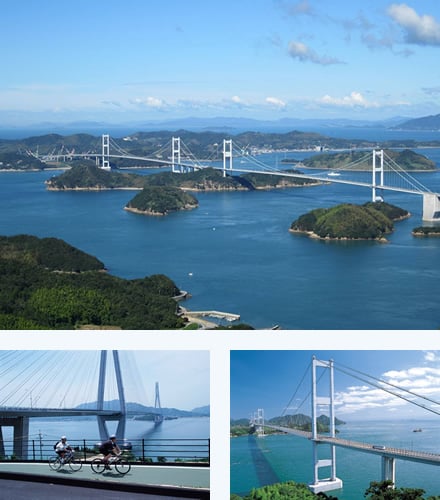
Shimanami Kaido
The 70-kilometer-long “Shimanami Kaido Highway” spans the Inland Sea and consists of 9 bridges which connect 6 islands scattered between Imabari-city in Shikoku and Onomichi-city in Honshu.
The world’s first three suspension bridges, the Kurushima Kaikyo-Ohashi, are highly valued structures and provide one of the best views of the floating islands, especially at sunset! Unlike many highways of this size, you can cross it on bike or on foot. You can drop by some of the islands to enjoy fresh tastes such as citrus fruit grown in the mild climate or savory seafood caught in the Inland Sea. Time almost slows down as you look out onto the quiet sea and inhale the fresh air. Along the Shimanami Kaido highway you can easily enjoy the harmony of the peaceful sea and as well as contemporary art.
There are 15 rental bicycle stations in total, including both starting points (Onomichi and Imabari).
| Address or Location | 2-8-1 Sunaba, Imabari-city, Ehime |
|---|---|
| Phone | 0898-41-3196 (Sunrise Itoyama) |
| Opening Hours | [April-September] 8:00-20:00 [October – March] 8:00-17:00 |
| Closed | |
| Fees | Adult: 500 yen/day Deposit: 1,000 yen (refunded if bicycle is returned to same station) |
| URL | http://www.sunrise-itoyama.jp/ (Japanese only) |
| Transportation | 15 min by car from Imabari Station. |
Iyonada Monogatari
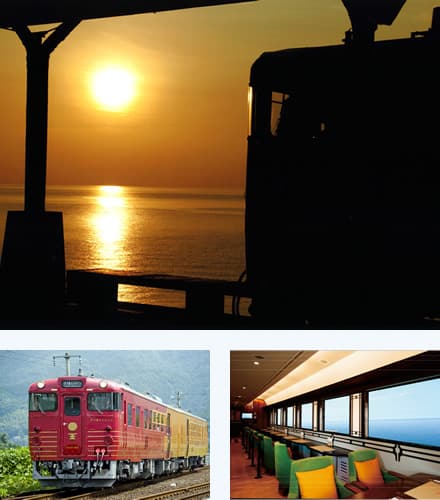
Iyonada Monogatari
Have you ever seen a glowing sunset over the sea from your train window? “Iyonada” is the perfect spot for it.
“Iyonada Monogatari” is the first sightseeing train in Shikoku and operating in two sectors, Matsuyama – Iyotaishu and Matsuyama – Yawatahama. They offer authentic dishes made of fresh local products. Come on board and enjoy the peaceful coastal scenery while having fine food at your seat!
| Address or Location | |
|---|---|
| Phone | 0570‐00‐4592 (JR Shikoku Information Centre) 8:00-20:00 (Open every day) |
| Opening Hours | Timetable from April 4, 2015 Ozu Line: depart Matsuyama at 8:26 — arrive Iyo-Ozu at 10:31 Yawatahama Line: depart Matsuyama at 13:28 — arrive Yawatahama at 15:52 Futami Line: depart Iyo-Ozu at 10:51 — arrive Matsuyama at 13:12 Dogo Line: depart Yawatahama at 16:06 — arrive Matsuyama at 18:06 |
| Closed | |
| Fees | Matsuyama – Yawatahama 2,260yen, Matsuyama – Iyo-Oozu 1,930yen *single journey, all seats are green car reserved seats *additional charge for meals (booking essential 4 days prior to departure) |
| URL | http://www.iyonadamonogatari.com/ (Japanese only) |
| Transportation |
Uwakai Pearls
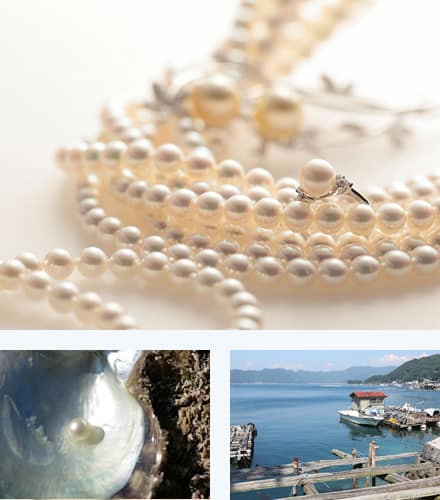
Uwakai Pearls
The Uwakai inlet is very deep, making it perfect for cultivating pearls. The pearls cultivated here are highly valued worldwide. Make reservations in advance to tour a pearl cultivating facility and try making your own pearl jewelry.
| Address or Location | Uwajima City, Ehime |
|---|---|
| Phone | 0895-22-3934 |
| Opening Hours | |
| Closed | |
| Fees | |
| URL | |
| Transportation |
Mt. Ishizuchi
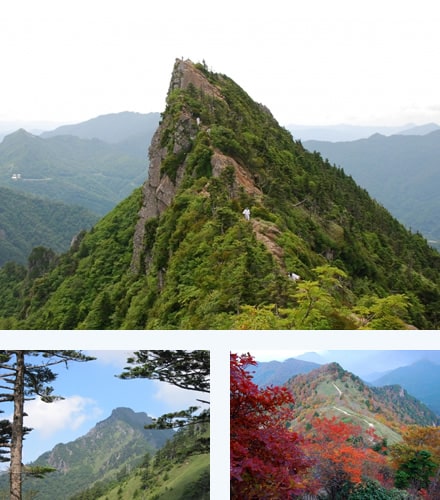
Mt. Ishizuchi
At 1,982m, this mountain is West Japan’s tallest. Most people climb it using the Omotesando course that starts near the city of Saijo. This holy mountain is counted among the seven holiest mountains in Japan. The mountain trail includes a trail chain to help with steep portions. (Less steep, indirect route is also available.)
| Address or Location | Saijo City and Kumakogen-cho, Ehime |
|---|---|
| Phone | 0897‐52‐1446(Saijo City) |
| Opening Hours | |
| Closed | |
| Fees | |
| URL | |
| Transportation | Fifty minutes by car from JR Iyo Saijo Station. Sixty minutes by car from Iyo Saijo Highway Interchange. It takes three hours to hike to the top of the mountain from Sanchojoju Station of Ichizuchi Tozan Ropeway. |
Shikoku Karst
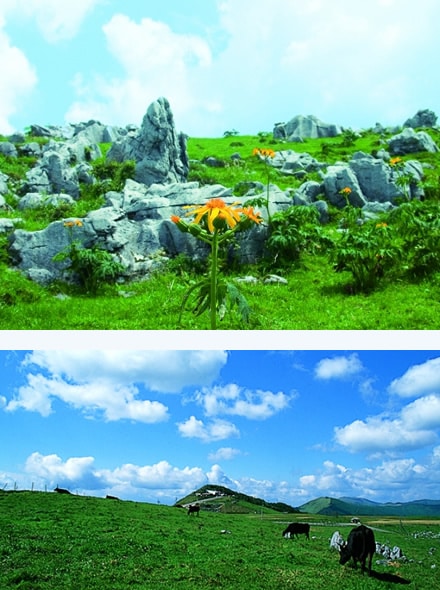
Shikoku Karst
This karst formation sits on the Kochi-Ehime border and is one of the three major karst formations in Japan. A trip through the region either on the driving route or along the hiking course is a breathtaking experience. Some liken it to running on top of the clouds.
| Address or Location | Nishidani, Kumakogen-cho, Ehime |
|---|---|
| Phone | 0892-21-1111(Kumakogen-cho) |
| Opening Hours | |
| Closed | |
| Fees | |
| URL | http://www.kumakogen.jp/modules/summer/index.php?content_id=1 (Japanese only) |
| Transportation | One hour and fifty minutes from Matsuyama Highway Interchange. |
Kankakei Valley

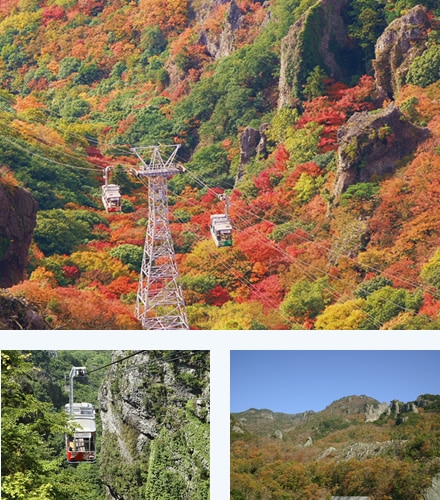
Kankakei Valley
Located within the Setonaikai National park, this is said to be one of the three most beautiful gorges in Japan. The rock formations and plant life are an attraction, and it can all be viewed in comfort from the Kankakei Ropeway.
| Address or Location | Otsu 168, Kankakedori Takase, Shodoshima-cho, Shozu-gun, Kagawa |
|---|---|
| Phone | 0879-82-2171 |
| Opening Hours | Ropeway 3/21~10/20,12/1~12/20 8:30 – 17:00 10/21~11/30 8:00~17:00 12/21~3/20 8:30~16:30 |
| Closed | Open year-round |
| Fees | Ropeway Round-trip: ¥1,350 (children: ¥680) One-way ¥750 (children: ¥380) |
| URL | http://www.kankakei.co.jp/ (Japanese only) |
| Transportation | Thirty to forty minutes by car from any Shodoshima port. |
Seto Inland Sea & Seto Ohashi Bridge
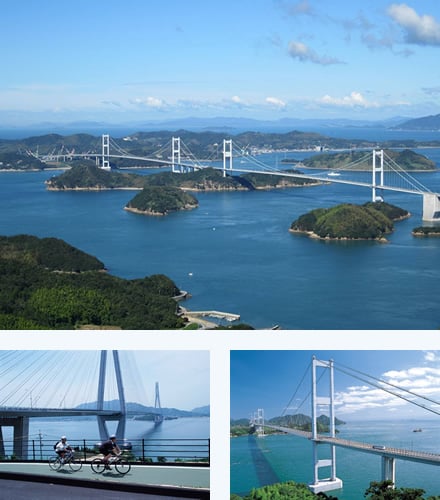
Shimanami Kaido
Acclaimed for its beauty as “the Jewel of the world”, Seto Inland Sea was one of the first national parks designated in Japan. Seto Ohashi Bridge, connecting Japan’s main island HONSHU and SHIKOKU over this beautiful sea, is the world’s longest double-deck road-rail bridge. This is a general term for the series of six bridges of different structural styles including a suspension bridge, a cable-stayed bridge and a truss bridge, spanning over the 9.4km strait with 37.3km of road and 32.4km of rail viaducts. Enjoy an awe-inspiring view of the entire bridge at the Seto Ohashi Memorial Park!
| Address or Location | Seto Ohashi Bridge: through Sakaide IC at Kawatsu-cho, Sakaide-city, Kagawa to Hayashima IC at Hayashima-cho, Tsukubo-gun, Okayama Seto Ohashi Memorial Park: 6-13 Bannosumidori-cho, Sakaide-city, Kagawa |
|---|---|
| Phone | 0877-45-2344 (Seto Ohashi Memorial Park Management Association) |
| Opening Hours | Seto Ohashi Memorial Park 9:00-17:00 (last admission at 16:30) |
| Closed | |
| Fees | Free |
| URL | http://www.jb-honshi.co.jp/english/index.html |
| Transportation |
Angel Road
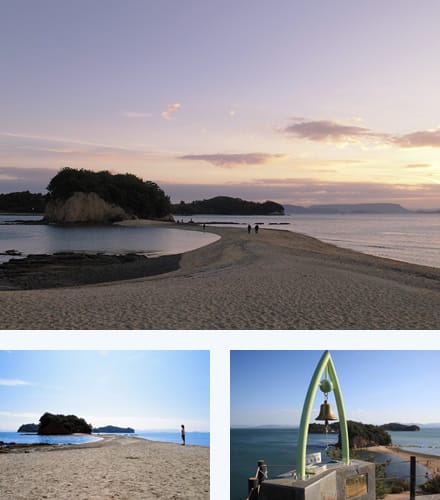
Angel Road
A popular location for couples where a sandbar connects three small islands to Shodoshima at low tide twice a day. This mysterious phenomenon has brought a belief that your wish will come true if you walk across the sandbar hand in hand with your loved one. Two of you can ring a blessing bell at the nearby “Yakusoku-no-Oka” observatory looking out over the Angel Road.
| Address or Location | Yoshima, Tonosho-cho, Shozu-gun, Kagawa |
|---|---|
| Phone | 0879-62-7004 (Tonosho-cho Commerce and Tourism devision) |
| Opening Hours | |
| Closed | |
| Fees | |
| URL | http://www.town.tonosho.kagawa.jp/kanko/tnks/info34.html |
| Transportation | 60-minute by ferry from Takamatsu Port to Tonosho Port, Shodoshima and approx. 10-minute drive from Tonosho Port Or take a bus on the Nishiura Line for Kose from Tonosho Port to “Kokusai hotel mae” bus stop (approx. 11 minutes) and walk 2 minutes |
Nakayama Senmaida Paddy Fields
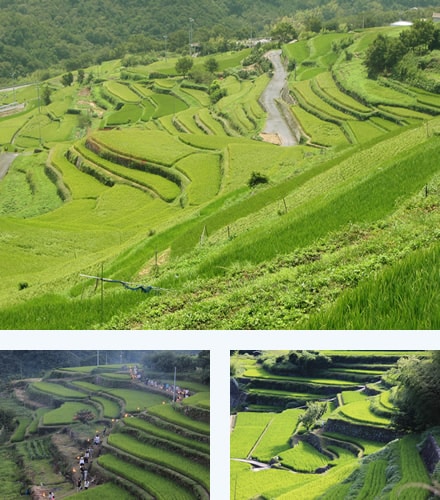
Nakayama Senmaida Paddy Fields
Located roughly in the center of Shodoshima Island, these terraced fields, created out of necessity in the steep valley, are approximately 800 in number. It is the only location in the prefecture chosen as one of Japan’s 100 picturesque rice paddies.
| Address or Location | Nakayama, Shodoshima-cho, Shozu-gun, Kagawa |
|---|---|
| Phone | |
| Opening Hours | |
| Closed | |
| Fees | |
| URL | |
| Transportation | Fifteen minutes by car from Ikeda Port. |
Yashima・Shikoku Mura Village
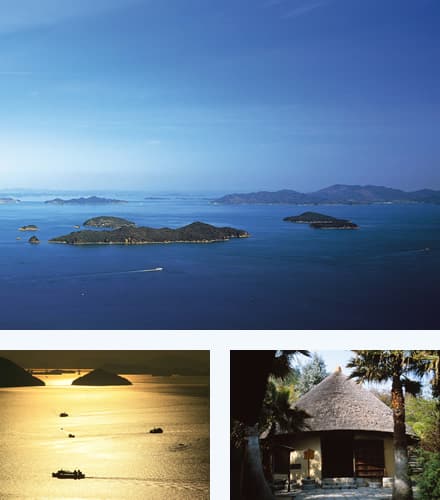
Yashima・Shikoku Mura Village
【Yashima】
A lava plateau of an approx. altitude of 293 m,jutting into the Seto Inland Sea. It features a viewing platform that offers sights of an ancient battlefield below your eyes as well as a place where you can enjoy panorama of the Seto Inland Sea dotted with islands of various sizes.
| Address or Location | Yashimahigashimachi,Takamatsu City,Kagawa |
|---|---|
| Phone | 087-841-9443 (Yashimasanjo Tourism Association) |
| Opening Hours | Expressway 6:30~22:00 |
| Closed | |
| Fees | |
| URL | http://www.yashima-navi.jp/ (Japanese only) |
| Transportation |
【Shikoku Mura Village】
Slip back in time to the period between the 1600s and the early 1900s! Old traditional houses were transported and re-built here to create an outdoor museum where visitors can experience the old way of life.
| Address or Location | Yashima Naka-machi 91, Takamatsu City, Kagawa Prefecture |
|---|---|
| Phone | 087-843-3111 |
| Opening Hours | 8:30-18:00 (closes at 17:30 during November through March) |
| Closed | |
| Fees | Adults: 800 yen, High school students: 500 yen, Elementary school/Junior high school students: 300 yen |
| URL | https://www.shikokumura.or.jp/ (Japanese only) |
| Transportation | Approx. 40 min by car from Takamatsu Airport. A 5-min walk from Yashima Station on the Kotoden Line. A 10-min walk from JR Yashima Station. |
Olive Harvest Festival & Shodoshima Olive Park
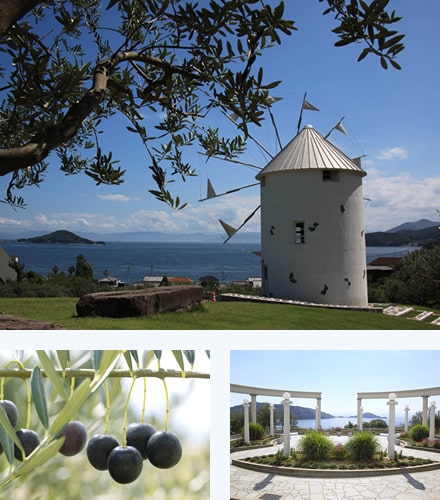
Olive Harvest Festival & Shodoshima Olive Park
Shodoshima is the birthplace of olive cultivation in Japan. The Olive Park, located on a hill overlooking the Seto Inland Sea, is home to 2,000 olive trees and over 130 varieties of herbs. On-site facilities include an olive museum, a natural hot spring, accommodation, a café and a restaurant serving olive-based dishes. The Olive Harvest Festival held from October to November offers a wide range of hands-on activities such as olive picking and classes for olive oil making, crafts, and cooking with olives and herbs.
| Address or Location | 1941-1 Nishimura, Shodoshima-cho, Shozu-gun, Kagawa |
|---|---|
| Phone | 0879-82-2200 |
| Opening Hours | Olive Museum 8:30-17:00, Sun Olive Hot Spring 12:00-21:00 (business hours vary depending on the facilities) |
| Closed | open every day (depending on the facilities) |
| Fees | admission free (charges apply for some facilities: hot spring and accommodation) |
| URL | http://www.olive-pk.jp/ (Japanese only) |
| Transportation | Take the Uchinomi high-speed ferry from Takamatsu Port to Kusakabe Port (45 minutes) and approx. 5-minute drive from Kusakabe Port |
Naruto Whirlpool

With its large scale, the Naruto Whirlpool is counted as one of the world’s top three tides.
Naruto Strait is one of the connections between the Pacific Ocean and the Inland Sea, and has a width of about 1.3 kilometers.
Due to its narrow size coupled with the tides, a large amount of water flows from the Inland Sea and the Pacific Ocean into the strait twice a day. The whirlpool is created by the complex shape of the bottom, and the difference in water levels. The current in the strait is the fastest in Japan, and sometimes create vortices of over 20 meters in diameter.
It’s fun to observe the whirlpools from the ship, and also thrilling to be able to look down into the sea through the glass floor of Uzunomichi, the promenade located under the Ohnaruto Bridge. See the panoramic view of Naruto Strait!
| Address or Location | Sightseeing boat: Kanko Port Narutochotosadomariura Naruto-city, Tokushima Uzunomichi, the promenade under Ohnaruto Bridge: Naruto-machi Park Naruto-cho Naruto-city, Tokushima |
|---|---|
| Phone | 088-687-0101 (Sightseeing boat) 088-683-6262 (Promenade under Ohnaruto Bridge) |
| Opening Hours | Sightseeing boat: 9:00 to 16:20 30-minute cruise Promenade under Ohnaruto Bridge:9:00 – 18:00 (until 17:00 from Oct. to Feb.) |
| Closed | |
| Fees | Sightseeing boat: 1,580-2,260 yen Promenade under Ohnaruto Bridge: admission fee 510 yen |
| URL | Sightseeing boat http://www.uzusio.com/ (Japanese only)Promenade under Ohnaruto Bridge http://www.uzunomichi.jp/english/ |
| Transportation |
Iya-no-Kazura Bashi (Vine Bridge)
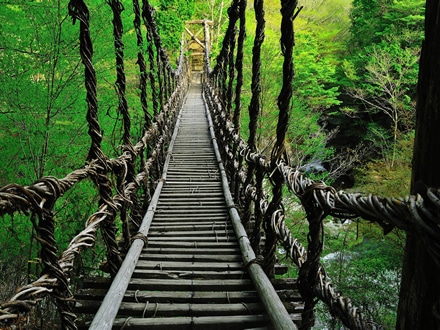
Iya-no-Kazura Bashi (Vine Bridge)
Designated as national important tangible cultural asset, Kazura Bridge was made of vines so that it could be easily cut to prevent pursuers from crossing. It was built by samurai who escaped into this area around 800 years ago. Every step on the bridge is met by shaking and rocking. If you look down at your feet, you will see the river far below from between the bridge’s logs. If you want a thrilling experience, visiting this bridge is a must!
| Address or Location | Nishiiyayamamuraimazentoku Miyoshi-city, Tokushima |
|---|---|
| Phone | 0883-72-7620 (Miyoshi City Office of Tourism) |
| Opening Hours | From sunrise to sunset Closed during the winter once every three years to be rebuilt |
| Closed | |
| Fees | 550 yen |
| URL | http://www.miyoshinavi.jp/english/02miru/detail.php?uid=SS000048&genr=101&area=2 |
| Transportation |
Ochiai Village・Togenkyo Iya
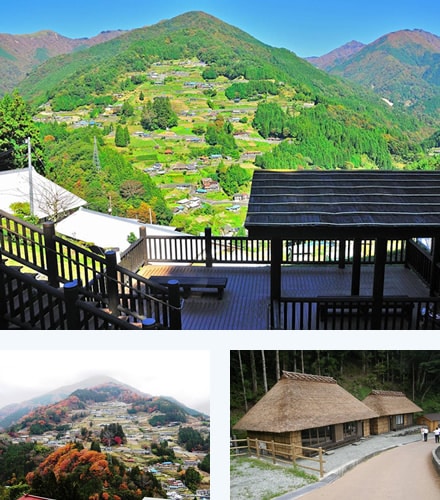
Ochiai Village・Togenkyo Iya
Ochiai Village
The village is located within the steep valleya, where the residents have cleared the mountainside, compiled stone walls to terrace the area, built houses, and broadened the fields since old times. With a difference in height of up to 390 meters from the highest and lowest points, community paths called “rido” weave between houses. It shares the characteristics of typical Japanese traditional villages in that it is built around a shrine which would function as a guardian god of the area. The landscape viewed from opposite hillside is a splendid sight! The 100-to-300-year-old houses are re-thatched and preserved as important traditional buildings.
Togenkyo Iya
In Togenkyo Iya, there are four types of accommodation available. Among the accomodations, there are three thatched-roof houses named “Fusho” “Seiko”, “Udoku”, and a fourth named “Chiiori” owned by Mr. Alex Kerr who is a researcher of Asian culture. You can stay there, and reflect on the traditional lifestyles within Japan. All of the houses were renovated by Mr. Kerr to help to retain beautiful and traditional aesthetics while allowing for modern people to stay comfortably.
It is possible to reserve an entire house. It’s fun to cook in the kitchen thanks to the electronic stove, a full set of kitchen appliances, and a number of Japanese spices. Spend your time however you would like!
| Address or Location | Miyoshi-city, Tokushima |
|---|---|
| Phone | 0883-88-2540(Tougenkyo-Iya Check-In Office) |
| Opening Hours | Please call between 9:00 – 18:00 (Togenkyo Iya) |
| Closed | |
| Fees | Stay in “Fusho” “Seiko”, or Udoku”: Adult 10,000 yen/night (When used by 2 people) (Togenkyo Iya) |
| URL | http://www.tougenkyo-iya.jp/index_en.html (Togenkyo Iya) |
| Transportation |
Chiiori Trust
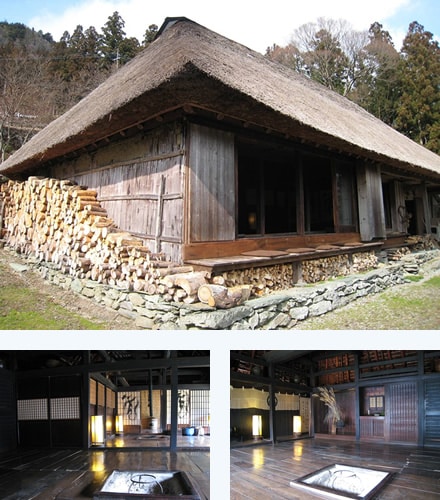
Chiiori Trust
Iya is an example of perfection in the eyes of Mr. Alex Kerr, a prominent researcher of Asian culture. It is said that the mythical land Iya, located at a high altitude with canyon, used to be the place where a group of samurai called “Heike” escaped to and resided. Nowadays, you can still see the thatched-roof houses that were ubiquitous to old Japan.
Mr. Kerr renovated the 300-year-old thatched roof houses into facilities that can be stayed at, as a symbol of revival for Japanese cultural values. Many overseas tourists visit here because they can lose their sense of time and forget about their obligations back in the city.
You can see the inside of the building and stay at the traditionally-styled house. (Day visit and overnight stay must be booked in advance.)
| Address or Location | 209 Turui, Higashi Iya Miyoshi-city, Tokushima |
|---|---|
| Phone | 0883-88-5290 |
| Opening Hours | Please call between 9:00 and 18:00 |
| Closed | |
| Fees | Visit: 500 yen Stay: 11,000 yen/night (when used by two people) |
| URL | http://www.chiiori.org/index.html (Japanese only) |
| Transportation |
Obokekyo Canyon Pleasure Boat
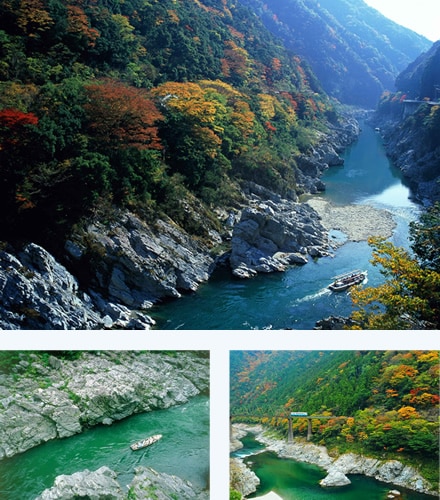
Obokekyo Canyon Pleasure Boat
A sightseeing boat will take you to famous spots designated as natural monuments. 30-minute boat ride provides the views of uniquely-shaped rocks, which makes you feel like you are looking up from the bottom of the river. In early summer, all of the plants and foliage are a vibrant shade of green, and in autumn the green leaves gives way to rich reds which cover the entire mountains are covered with red-leaves. Red leaves and the emerald green river create picturesque, serene landscape.
The reception desk is next to the Obokekyo Mannnaka Restaurant. The minimum passenger count is 1.
The traditional trolley trains without windows are also highly recommended to enjoy the feeling of wind in your hair as you take in the view of Oboke.
| Address or Location | 1520 Yamashirochonishiu Miyoshi-city, Tokushima |
|---|---|
| Phone | 0883-84-1211 |
| Opening Hours | 9:00 to 17:00 Not in service during flooding or storms |
| Closed | |
| Fees | Adult: 1,080 yen |
| URL | http://www.mannaka.co.jp/restaurant/excursionship/excursionship.html (Japanese only) |
| Transportation |
Iya Valley and the statue of the Peeing Boy
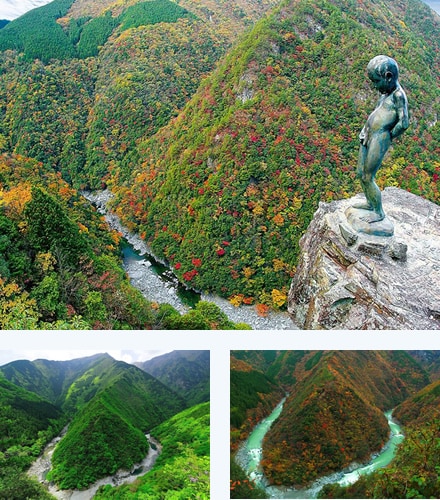
Iya Valley and the statue of the Peeing Boy
Counted as one of the three best hidden scenic spots in Japan, Iya valley gives you a wonderful and magnificent view when looking down the steep, V-shaped valley which is surrounded by forest on both sides. Especially in autumn, the red-tinted leaves and emerald green river create a beautiful contrast. In winter you can see a sea of clouds which covers the valley, feeling like you have been whisked away to a mythical world. This spot will let you get away from the busy daily life.
In the area, there is the statue of the Peeing Boy standing on the rock which overlooks the valley. The statues rests atop a large boulder that was left during the construction of the Iya Highway.
It is a 200 meter drop from the statue to the bottom of the valley, which creates a beautiful yet frightening view. It is said that the statue was created based on a story that the local kids would test their courage by standing on the rock.
| Address or Location | Ikedachomatsuo matsumoto Miyoshi-city, Tokushima |
|---|---|
| Phone | |
| Opening Hours | |
| Closed | |
| Fees | |
| URL | |
| Transportation |
Mt.Tsurugi
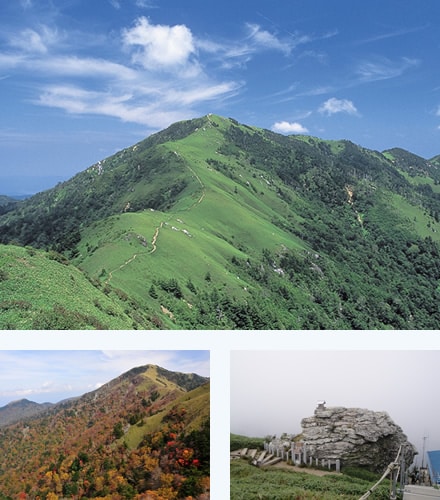
Mt.Tsurugi
The second highest mountain in western Japan at 1,955 meters elevation boasts excellent scenery and you can see as far as Kishu area, the Seto Inland sea and even Cape Ashizuri in a fine day from its summit. Its panoramic view is breathtaking and the sea of clouds are very magical. You can find beautiful alpine plants when in season, such as Kirengeshoma palmata.
The name, Tsurugi meaning sword, originates from the legend that sword of the Emperor Antoku was hidden deep within these remote mountain. It is also known as the sacred mountain for mountain pilgrimage.
| Address or Location | Minokoshi, Higashi-Iya, Miyoshi city, Tokushima |
|---|---|
| Phone | 0883-72-7620 (Miyoshi City Office of Tourism) |
| Opening Hours | |
| Closed | N/A (Open daily all year round), but chairlift closed between 1/Dec and 29/Apr in winter season |
| Fees | |
| URL | http://www.turugirift.com/ (Japanese only) |
| Transportation |
Hiwasa Chelonian Museum Caretta
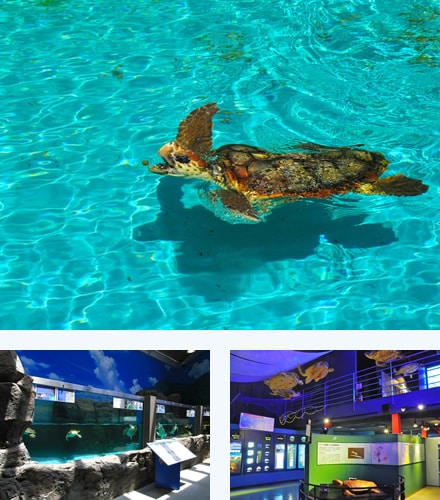
Hiwasa Chelonian Museum Caretta
This is the only museum in the world dedicating to sea turtles. “Caretta” comes from the scientific name for the loggerhead sea turtles. On the ground floor, there are stuffed turtles from around the world, an exhibition to trace the turtles’ evolutionary processes and an aquarium to observe their ecology. On the upper floor, you will learn more about sea turtles through quizzes and a 120-inch high-definition theatre. Don’t forget to visit the outdoor turtle pool and artificial hatchery where adorable baby turtles are swimming!
| Address or Location | 374-4 Hiwasaura, Minami-cho, Kaifu-gun, Tokushima |
|---|---|
| Phone | 0884-77-1110 |
| Opening Hours | 9:00-17:00 |
| Closed | Mondays (except Bank Holidays, in which case closed the next working day), December 29 to 31 |
| Fees | Adult 600yen, Student (ages 13-18) 500yen, Child (under 12s) 300yen, Discount for a group over 30 |
| URL | Sightseeing boat http://www.town.minami.tokushima.jp/umigame/caretta/ (Japanese only) |
| Transportation | approx. 90-minute drive from Tokushima IC, 5-minute drive from JR Hiwasa station |
Tham khảo các kinh nghiệm du lịch đầy hữu ích từ Kavo Travel:
More information: shikoku 中文, 四國英文, 四國, 日本四國地圖, 溫泉 英文, 觀光景點 英文, 四國 景點, 日本四國旅遊景點, tourism 中文, 四國旅遊, 日本四國地圖, 四國地圖, 四國景點地圖, 日本地图, jr四國路線圖. For detail see dulichkhatvongviet.com

"Là người đam mê du lịch, với Tôi du lịch là cuộc sống, sứ mệnh của chúng Tôi là thiết kế và tổ chức những Tour du lịch có giá trị cao cho mọi khách hàng, giúp khách hàng có được những chuyến đi thực sự ý nghĩa, vui vẻ và bình an, giúp gắn kết tất cả các thành viên để mọi người hiểu nhau hơn và làm việc hiệu quả hơn"